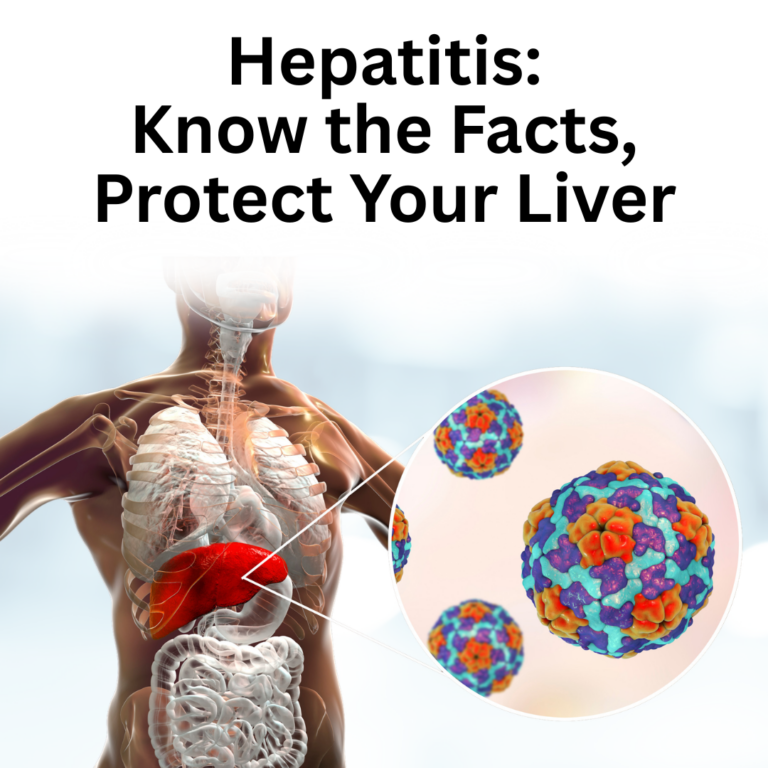
Hepatitis is an inflammation of the liver that can affect its ability to function properly. The liver is one of the most important organs in the body, responsible for filtering toxins, supporting digestion, storing energy, and regulating essential body functions.
This condition is commonly caused by viral infections, but it may also occur due to certain medications, excessive alcohol consumption, exposure to toxins, or autoimmune conditions. Depending on the cause and type, liver inflammation may be temporary or develop into a long-term (chronic) condition that requires medical monitoring.
Early detection, prevention, and proper treatment are important to maintain liver health. According to the World Health Organization (WHO), viral hepatitis remains a significant global health concern, affecting millions of people worldwide.
Types of Viral Hepatitis
Hepatitis A
Hepatitis A is a viral infection that is usually spread through contaminated food or water. It is commonly associated with poor sanitation and hygiene practices.
Common symptoms may include:
- Fever
- Fatigue
- Loss of appetite
- Nausea or vomiting
- Abdominal discomfort
- Dark-coloured urine
- Yellowing of the skin and eyes (jaundice)
Most people recover completely from this infection. Vaccination and good hygiene practices can help reduce the risk of transmission.
Hepatitis B
Hepatitis B affects the liver and may become a chronic condition if not detected and monitored properly.
It can spread through:
- Contact with infected blood
- Unprotected sexual contact
- Sharing contaminated needles
- Transmission from an infected mother to her baby during childbirth
Some individuals may not experience noticeable symptoms. However, long-term infection may increase the risk of serious liver complications, including cirrhosis and liver cancer.
Prevention methods include:
- Receiving the Hepatitis B vaccine
- Regular screening for individuals at risk
- Avoiding sharing personal items that may contain blood, such as razors or needles
Hepatitis C
Hepatitis C is mainly transmitted through blood-to-blood contact. Many people may have no symptoms for years, making early screening important.
Without appropriate treatment, this infection may lead to chronic liver disease and other complications. Early diagnosis and medical care can help reduce the risk of serious liver damage.
Hepatitis Symptoms You Should Not Ignore
Some individuals may not experience obvious symptoms. However, common warning signs may include:
- Persistent tiredness
- Loss of appetite
- Nausea or vomiting
- Abdominal pain, especially on the upper right side
- Dark-coloured urine
- Pale stools
- Yellowing of the skin or eyes
- Unexplained weight loss
If you experience these signs, consult a healthcare professional for proper assessment and advice.
Who Should Consider Liver Screening?
Screening may be recommended for individuals who:
- Have never had a hepatitis test before
- Have a family history of Hepatitis B
- Have been exposed to infected blood
- Work in healthcare settings
- Have unprotected sexual exposure
- Are planning for pregnancy
- Have abnormal liver function test results
A simple blood test can help assess your liver health and determine whether further monitoring or treatment is required.
Hepatitis B Vaccination
Vaccination is an effective way to reduce the risk of Hepatitis B infection.
Blood tests can help determine your status, including:
- HBsAg: Indicates whether there is an active infection
- HBsAb: Indicates whether protective antibodies are present
Your doctor can advise whether vaccination, further testing, or regular monitoring is needed based on your results.
How to Protect Your Liver
You can support your liver health by:
✅ Getting recommended vaccinations
✅ Practising safe health and sexual habits
✅ Avoiding sharing needles or personal items that may contain blood
✅ Limiting alcohol consumption
✅ Maintaining a healthy weight
✅ Eating a balanced diet
✅ Going for regular health check-ups
When Should You See a Doctor?
If you experience symptoms, have abnormal liver test results, or are concerned about your risk of infection, seek medical advice for proper evaluation.
Early detection and prevention can help protect your liver health.
Visit Poliklinik Mediprima for consultation, liver screening, blood tests, vaccination advice, and personalised medical guidance.